Vocabulary accounts for 25% of your IELTS Writing and Speaking scores. It is assessed under the criterion called Lexical Resource — and it is the single area where most students between Band 6 and Band 7 lose marks they shouldn't.
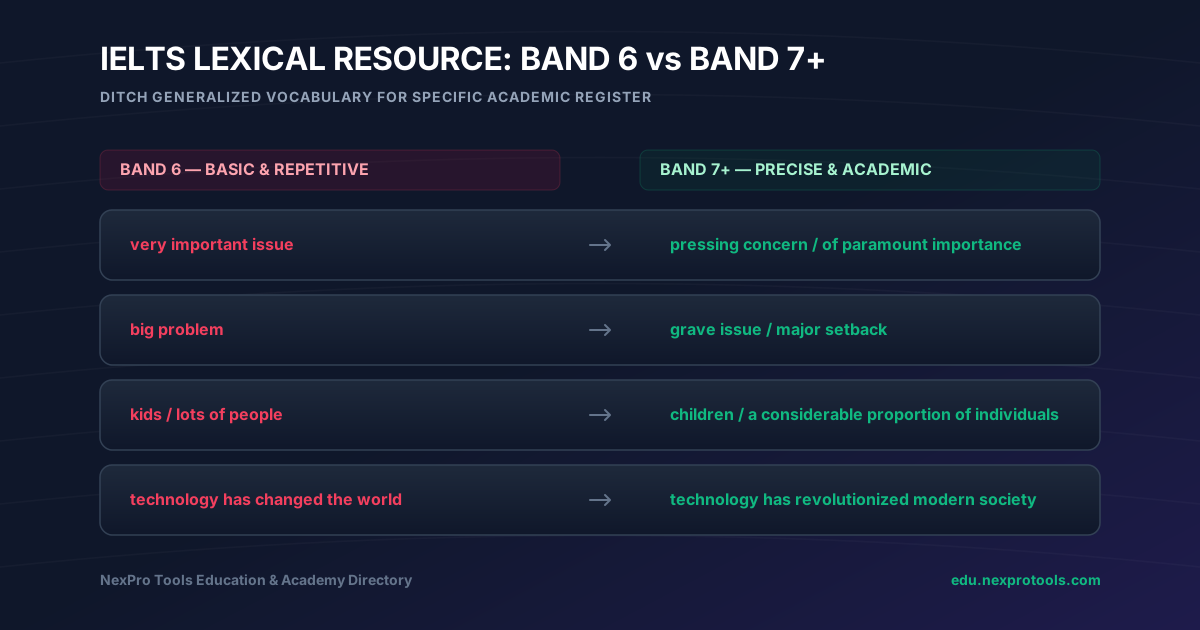
The difference between Band 6 and Band 7 vocabulary is not about using longer or rarer words. It is about using a wider range of words accurately, with awareness of collocation and register. A student who writes "this is a very important issue" will score lower than one who writes "this is a pressing concern" — not because "pressing" is rare, but because it is precise, formal, and correctly collocated.
This guide gives you 120 high-value IELTS words organised by topic, with collocations and usage examples built for Writing Task 2 and Speaking Part 3. Use the NexPro Vocabulary Builder to practise them with spaced repetition after reading.
What Lexical Resource Actually Means at Band 7
The IELTS official band descriptor for Lexical Resource at Band 7 states: uses sufficient range of vocabulary to allow some flexibility and precision; uses less common lexical items with some awareness of style and collocation; occasional errors in word choice and collocation.
Three things matter:
- Range: You cannot repeat the same word more than twice in an essay. If "important" appears four times, you are demonstrating limited range regardless of how good your other vocabulary is.
- Collocations: Words that naturally go together. "Make a decision" is correct; "do a decision" is not, even though both verbs mean to perform an action. Examiners notice incorrect collocations immediately.
- Register: Academic writing requires formal vocabulary. Words like "kids", "lots of", "really", and "stuff" drop your register and your score.
How to Use This List
Do not memorise these words in isolation. For each word, learn: the word itself, its word family (noun/verb/adjective/adverb forms), its most common IELTS collocations, and one model sentence you can adapt for Task 2 essays.
Topic 1: Education (25 words)
- curriculum (noun) — Collocation: design / reform / national curriculum. Model sentence: The national curriculum should be reformed to include financial literacy and critical thinking.
- pedagogy (noun) — Collocation: modern / traditional pedagogy. Model sentence: Modern pedagogy increasingly favours student-centred learning over rote instruction.
- rote learning (noun phrase) — Collocation: rely on / reject rote learning. Model sentence: Rote learning may help students pass examinations, but it does little to develop analytical skills.
- critical thinking (noun phrase) — Collocation: foster / develop / lack critical thinking. Model sentence: Universities have a responsibility to foster critical thinking rather than passive knowledge absorption.
- vocational training (noun phrase) — Collocation: offer / invest in vocational training. Model sentence: Governments should invest in vocational training as an alternative to purely academic pathways.
- literacy rate (noun phrase) — Collocation: improve / low literacy rate. Model sentence: Nations with low literacy rates consistently show weaker economic development outcomes.
- tuition fees (noun phrase) — Collocation: abolish / increase / waive tuition fees. Model sentence: Abolishing tuition fees would make higher education accessible to students from all socioeconomic backgrounds.
- extracurricular (adjective) — Collocation: extracurricular activities / pursuits. Model sentence: Extracurricular activities build social skills that academic study alone cannot develop.
- transferable skills (noun phrase) — Collocation: acquire / develop transferable skills. Model sentence: Employers increasingly value transferable skills such as communication, teamwork, and problem-solving.
- academic achievement (noun phrase) — Collocation: measure / improve academic achievement. Model sentence: High-stakes examinations are a limited measure of genuine academic achievement.
- lifelong learning (noun phrase) — Collocation: promote / embrace lifelong learning. Model sentence: The rapidly changing job market makes lifelong learning a necessity rather than a choice.
- blended learning (noun phrase) — Collocation: adopt / implement blended learning. Model sentence: Blended learning combines digital flexibility with the structured environment of a physical classroom.
- compulsory education (noun phrase) — Collocation: extend / fund compulsory education. Model sentence: Many argue that compulsory education should extend to age 18 to reduce youth unemployment.
- standardised testing (noun phrase) — Collocation: rely on / reform standardised testing. Model sentence: An over-reliance on standardised testing narrows the curriculum and discourages creativity.
- dropout rate (noun phrase) — Collocation: reduce / high dropout rate. Model sentence: Financial hardship remains the primary driver of the high dropout rate in many developing nations.
- peer learning (noun phrase) — Collocation: encourage / benefit from peer learning. Model sentence: Collaborative assignments encourage peer learning and prepare students for workplace dynamics.
- intellectual curiosity (noun phrase) — Collocation: cultivate / suppress intellectual curiosity. Model sentence: The best teachers cultivate intellectual curiosity rather than simply delivering content.
- graduate employability (noun phrase) — Collocation: improve / measure graduate employability. Model sentence: Graduate employability has become a key metric by which universities are evaluated.
- funding allocation (noun phrase) — Collocation: increase / debate funding allocation. Model sentence: The debate over funding allocation between arts and science subjects reflects deeper societal values.
- educational attainment (noun phrase) — Collocation: low / improve educational attainment. Model sentence: Parental income remains the strongest predictor of educational attainment across most countries.
- pedagogical approach (noun phrase) — Collocation: adopt / shift pedagogical approach. Model sentence: A student-centred pedagogical approach yields better long-term retention than lecture-based instruction.
- socioeconomic disparity (noun phrase) — Collocation: address / widen socioeconomic disparity. Model sentence: Without targeted intervention, digitalisation risks widening the socioeconomic disparity in education access.
- remedial education (noun phrase) — Collocation: provide / need remedial education. Model sentence: Students who fall behind early benefit significantly from targeted remedial education programmes.
- academic rigour (noun phrase) — Collocation: maintain / lack academic rigour. Model sentence: Online degrees are sometimes criticised for lacking the academic rigour of campus-based programmes.
- school autonomy (noun phrase) — Collocation: grant / restrict school autonomy. Model sentence: Granting schools greater autonomy allows them to tailor the curriculum to local community needs.
Topic 2: Technology (25 words)
- automation (noun) — Collocation: driven by / fear automation. Model sentence: Automation is expected to displace millions of low-skilled workers over the next decade.
- artificial intelligence (noun phrase) — Collocation: develop / regulate artificial intelligence. Model sentence: Regulating artificial intelligence is one of the most complex policy challenges governments currently face.
- digital literacy (noun phrase) — Collocation: promote / lack digital literacy. Model sentence: Digital literacy should be considered a core competency alongside reading and mathematics.
- cybersecurity (noun) — Collocation: strengthen / threat to cybersecurity. Model sentence: As more services move online, cybersecurity has become a matter of national security.
- algorithm (noun) — Collocation: biased / design an algorithm. Model sentence: A biased algorithm can perpetuate discrimination in hiring, lending, and criminal justice.
- misinformation (noun) — Collocation: spread / combat misinformation. Model sentence: Social media platforms have a moral obligation to combat the spread of misinformation.
- data privacy (noun phrase) — Collocation: protect / violate data privacy. Model sentence: Citizens have a legitimate right to expect their data privacy to be protected by law.
- surveillance (noun) — Collocation: mass / government surveillance. Model sentence: Mass surveillance by governments raises profound questions about civil liberties.
- digital divide (noun phrase) — Collocation: widen / bridge the digital divide. Model sentence: Without investment in infrastructure, the digital divide will deepen existing inequality.
- obsolete (adjective) — Collocation: render / become obsolete. Model sentence: Automation threatens to render entire categories of employment obsolete within a generation.
- innovation (noun) — Collocation: drive / stifle innovation. Model sentence: Overregulation risks stifling the innovation that makes technology sectors economically productive.
- disruptive technology (noun phrase) — Collocation: introduce / resist disruptive technology. Model sentence: Disruptive technology often creates short-term economic hardship before generating long-term benefits.
- screen time (noun phrase) — Collocation: limit / excessive screen time. Model sentence: Excessive screen time among children has been linked to reduced attention spans and sleep disruption.
- remote work (noun phrase) — Collocation: normalise / enable remote work. Model sentence: The normalisation of remote work has fundamentally changed how employees and employers interact.
- technological determinism (noun phrase) — Collocation: reject / embrace technological determinism. Model sentence: Technological determinism oversimplifies the relationship between innovation and social change.
- interconnectedness (noun) — Collocation: global / increase interconnectedness. Model sentence: The global interconnectedness enabled by the internet has accelerated both opportunity and vulnerability.
- e-commerce (noun) — Collocation: growth of / rely on e-commerce. Model sentence: The rapid growth of e-commerce has devastated traditional high-street retail in many countries.
- tech literacy (noun phrase) — Collocation: build / assess tech literacy. Model sentence: Building tech literacy from primary school age is essential for economic competitiveness.
- deepfake (noun) — Collocation: create / detect a deepfake. Model sentence: Deepfake technology poses a serious and growing threat to the integrity of public information.
- platform economy (noun phrase) — Collocation: regulate the platform economy. Model sentence: The platform economy has generated enormous wealth while exploiting regulatory grey areas.
- net neutrality (noun phrase) — Collocation: protect / undermine net neutrality. Model sentence: Abandoning net neutrality would allow internet service providers to create a two-tiered web.
- technological unemployment (noun phrase) — Collocation: address / cause technological unemployment. Model sentence: Technological unemployment is not inevitable, but it requires proactive retraining investment.
- open-source (adjective) — Collocation: develop / rely on open-source. Model sentence: Open-source software democratises access to technology by removing cost barriers.
- wearable technology (noun phrase) — Collocation: develop / adopt wearable technology. Model sentence: Wearable technology is transforming preventive healthcare by enabling continuous health monitoring.
- gig economy (noun phrase) — Collocation: work in / regulate the gig economy. Model sentence: The gig economy offers flexibility but frequently denies workers basic employment protections.
Topic 3: Environment (20 words)
- carbon footprint (noun phrase) — Collocation: reduce / measure carbon footprint. Model sentence: Individuals can reduce their carbon footprint through diet changes, reduced air travel, and renewable energy adoption.
- renewable energy (noun phrase) — Collocation: invest in / transition to renewable energy. Model sentence: The transition to renewable energy is both an environmental necessity and an economic opportunity.
- sustainability (noun) — Collocation: promote / undermine sustainability. Model sentence: Corporate sustainability commitments are meaningless without transparent, independently verified reporting.
- biodiversity (noun) — Collocation: protect / loss of biodiversity. Model sentence: The loss of biodiversity in tropical rainforests represents an irreversible ecological catastrophe.
- deforestation (noun) — Collocation: halt / cause deforestation. Model sentence: Agricultural expansion is the primary driver of deforestation in South America and Southeast Asia.
- fossil fuels (noun phrase) — Collocation: phase out / subsidise fossil fuels. Model sentence: Continuing to subsidise fossil fuels while claiming to address climate change is deeply contradictory.
- carbon tax (noun phrase) — Collocation: introduce / oppose a carbon tax. Model sentence: A well-designed carbon tax internalises the environmental cost of pollution into market prices.
- ecological impact (noun phrase) — Collocation: assess / minimise ecological impact. Model sentence: Every infrastructure project should include a mandatory assessment of its ecological impact.
- net zero (noun phrase) — Collocation: achieve / commit to net zero. Model sentence: Many nations have committed to net zero emissions by 2050, but implementation remains inconsistent.
- greenhouse gases (noun phrase) — Collocation: emit / reduce greenhouse gases. Model sentence: The industrial sector is responsible for approximately one-third of global greenhouse gas emissions.
- conservation (noun) — Collocation: wildlife / marine conservation. Model sentence: Marine conservation efforts have successfully restored fish populations in several protected ocean zones.
- urban sprawl (noun phrase) — Collocation: limit / cause urban sprawl. Model sentence: Unplanned urban sprawl destroys agricultural land and increases commuting distances significantly.
- circular economy (noun phrase) — Collocation: adopt / shift to circular economy. Model sentence: A circular economy model eliminates waste by designing products for reuse and recycling from the outset.
- climate refugee (noun phrase) — Collocation: protect / become a climate refugee. Model sentence: Rising sea levels are expected to create hundreds of millions of climate refugees by 2050.
- carbon offset (noun phrase) — Collocation: purchase / criticise carbon offsets. Model sentence: Critics argue that carbon offsets allow corporations to avoid genuine emissions reductions.
- environmental legislation (noun phrase) — Collocation: strengthen / weaken environmental legislation. Model sentence: Stronger environmental legislation is essential, but enforcement determines its actual effectiveness.
- habitat destruction (noun phrase) — Collocation: cause / reverse habitat destruction. Model sentence: Agricultural expansion is the leading cause of habitat destruction for endangered species.
- ecotourism (noun) — Collocation: promote / develop ecotourism. Model sentence: Responsibly managed ecotourism can fund conservation while providing income for local communities.
- air quality index (noun phrase) — Collocation: monitor / improve air quality index. Model sentence: Cities with poor air quality index ratings show consistently higher rates of respiratory disease.
- greenwashing (noun) — Collocation: accuse of / engage in greenwashing. Model sentence: Several large corporations have been accused of greenwashing — using environmental claims as marketing while changing little.
Topic 4: High-Value Linking & Argument Phrases (25 words/phrases)
These are not topic words — they are the structural vocabulary that makes your argument flow like a Band 7+ essay.
- Adding — Furthermore: Furthermore, this policy would disproportionately affect low-income families.
- Adding — In addition to this: In addition to this, the long-term economic benefits outweigh the initial cost.
- Contrasting — Nevertheless: Nevertheless, the environmental benefits of this approach are difficult to dismiss.
- Contrasting — Despite this: Despite this, many governments have been reluctant to implement the necessary reforms.
- Conceding — Admittedly: Admittedly, online learning offers flexibility that traditional classrooms cannot match.
- Conceding — It is true that... however: It is true that automation eliminates jobs; however, it also creates new categories of employment.
- Cause — Owing to: Owing to increased screen time, rates of myopia among children have risen sharply.
- Cause — As a consequence of: As a consequence of rapid urbanisation, many cities are struggling with air quality.
- Effect — This leads to: This leads to a cycle of poverty that is extremely difficult to break.
- Effect — Consequently: Consequently, the burden falls disproportionately on lower-income households.
- Emphasis — It is paramount that: It is paramount that governments invest in renewable energy infrastructure immediately.
- Emphasis — A compelling argument can be made: A compelling argument can be made that education is the most effective long-term solution.
- Hedging — It could be argued that: It could be argued that the benefits of social media outweigh its documented harms.
- Hedging — There is evidence to suggest: There is evidence to suggest that smaller class sizes improve student outcomes significantly.
- Hedging — It is widely acknowledged that: It is widely acknowledged that mental health services in many countries are chronically underfunded.
- Exemplifying — This is particularly evident in: This is particularly evident in countries such as Finland, where education reform has been transformative.
- Exemplifying — A case in point is: A case in point is the UK's sugar tax, which reduced soft drink consumption measurably.
- Summarising — On balance: On balance, the advantages of renewable energy investment far outweigh the transitional costs.
- Summarising — Taking everything into account: Taking everything into account, a combined approach involving both individual and government action is most effective.
- Introducing an alternative — Alternatively: Alternatively, governments could invest in public transport rather than imposing higher fuel taxes.
- Qualifying — To a certain extent: To a certain extent, technology has improved access to education globally.
- Stance — I am firmly of the opinion that: I am firmly of the opinion that free university education benefits society as a whole.
- Stance — From my perspective: From my perspective, the cultural benefits of preserving traditional practices far outweigh the economic cost.
- Negative stance — It is highly debatable whether: It is highly debatable whether increasing prison sentences has any measurable deterrent effect.
- Scope limitation — In the context of: In the context of developing nations, this argument carries considerably more weight.
The 3 Most Common Vocabulary Mistakes to Avoid
- Using big words incorrectly. Writing "the ramifications are ubiquitous" when you mean "the effects are widespread" demonstrates poor word choice control. Examiners score accurate simple vocabulary higher than incorrect complex vocabulary.
- Overusing the same linking word. Using "However" five times in one essay signals limited range. Rotate between: Nevertheless, Despite this, Conversely, Yet, Notwithstanding this.
- Formal-informal mixing. Never write "kids" in Task 2 — write "children" or "young people". Never write "a lot of" — write "a significant number of", "a considerable proportion of", or "numerous". Never write "really important" — write "critically important", "of paramount importance", or "indispensable".
Practice With NexPro's Vocabulary Builder
The fastest way to retain these words is spaced repetition — reviewing them at scientifically timed intervals based on how well you know each one.
NexPro's Vocabulary Builder includes all major IELTS topic modules with a built-in Leitner flashcard system. Words you struggle with appear daily; words you know confidently appear less often. After two weeks of daily 10-minute sessions, most students report a measurable improvement in the variety of vocabulary they produce under exam conditions.
Continue your preparation: