Chapter 5: Numbers from Ten to Twenty
Standard NCERT & CBSE aligned study curriculum. Master concepts, track accuracy, revise weak areas, and challenge yourself with 9 customized practice modes.
Syllabus Sections
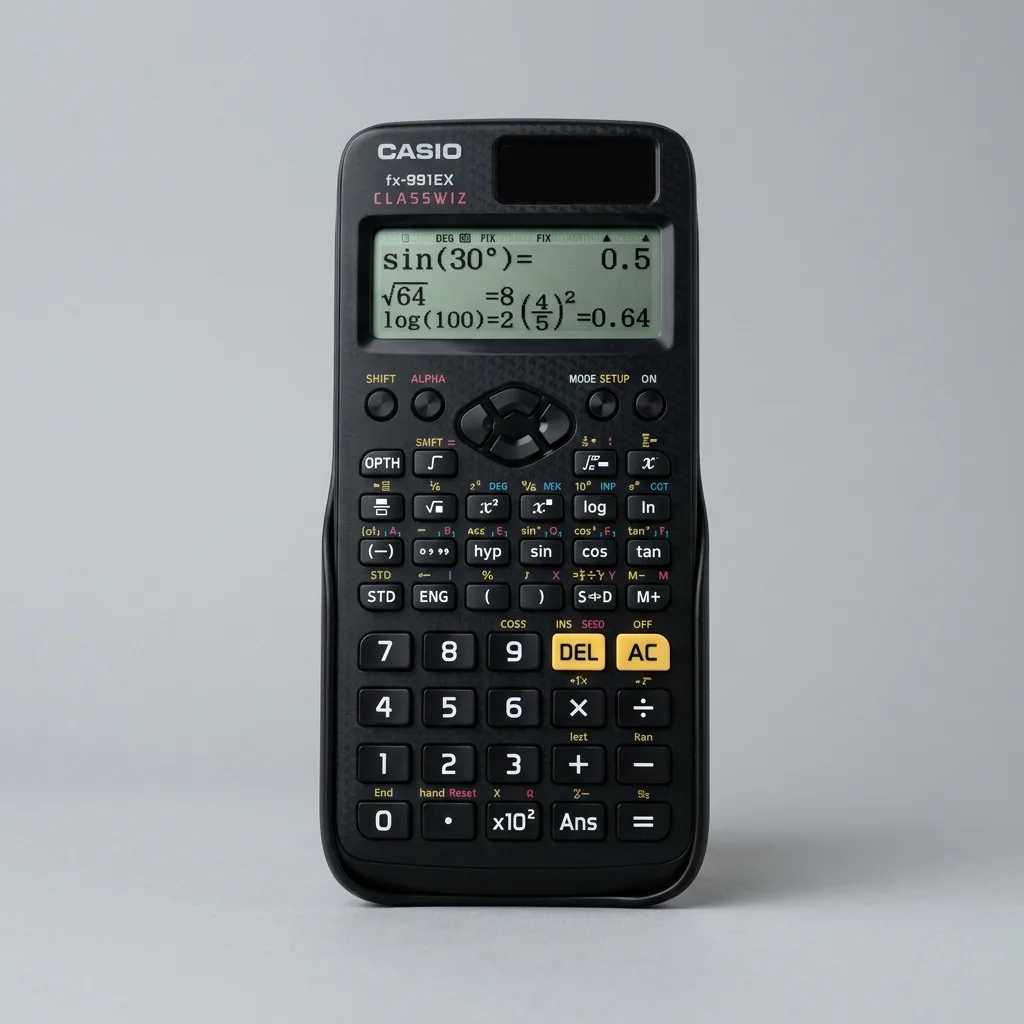
The #1 recommended scientific calculator for board exams, math, and physics.
As an Amazon Associate we earn from qualifying purchases.
Chapter Overview
Welcome to Class I Mathematics: Numbers from Ten to Twenty. This chapter forms a core structural component of the math syllabus, designed to build analytical rigor and key formula models.
Use the detailed subtopic guide below to review standard definitions, key mathematical rules, and study guidelines.
Prerequisite Concepts
About This Chapter
This comprehensive study guide for Numbers from Ten to Twenty is designed for Class I students following the CBSE and NCERT Mathematics curriculum. It covers 4 key subtopics including Making groups of ten, Place value Tens and Ones, Counting 10 to 20, and 1 more essential concepts. Whether you are preparing for school examinations, CBSE board exams, or competitive tests, this resource provides everything you need to build a strong conceptual foundation and achieve mastery.
The chapter includes 1 key formulas and equations, 1 fully worked step-by-step example problems, interactive practice exercises across 9 difficulty categories, timed mock quizzes, and downloadable worksheets. Each topic is explained with detailed concept definitions, mathematical representations, and expert study guidelines to help you understand not just the "how" but the "why" behind every formula and method.
Mathematics is a subject that rewards consistent practice and conceptual clarity over rote memorization. As you work through this chapter on Numbers from Ten to Twenty, focus on understanding the underlying principles first, then gradually increase problem difficulty. Use the practice sections to identify and strengthen weak areas, and refer to the common mistakes section to avoid the pitfalls that most students encounter.
What You'll Learn in This Chapter
By the end of studying Numbers from Ten to Twenty for Class I, you will have developed proficiency in the following learning outcomes as outlined by the NCERT syllabus:
Count, read and write numbers from 10 to 20.
Understand the concept of tens and ones.
Identify greater and smaller numbers in this range.
Prerequisites for This Chapter
Before studying Numbers from Ten to Twenty, make sure you are comfortable with the following prerequisite concepts. A strong foundation in these areas will help you understand new topics faster and solve problems more confidently:
If any of these prerequisites feel unfamiliar, consider reviewing them first using the Related Chapters section at the bottom of this page. Building a solid base ensures you can tackle Numbers from Ten to Twenty with full confidence.
Real-World Applications of Numbers from Ten to Twenty
Students often wonder “Where will I use Numbers from Ten to Twentyin real life?” The answer is: everywhere. The mathematical concepts you learn in this chapter have practical applications across science, engineering, technology, medicine, finance, and everyday problem-solving. Here are some notable examples:
Academic Examinations
Understanding Numbers from Ten to Twenty is essential for scoring well in CBSE board exams, competitive entrance tests like JEE and NEET, and mathematical olympiads.
Higher Education Foundation
The concepts in Numbers from Ten to Twenty form the foundation for advanced studies in engineering, computer science, physics, economics, and data science at the university level.
Logical Thinking & Problem Solving
Studying Numbers from Ten to Twenty develops analytical thinking, pattern recognition, and systematic problem-solving skills that are valuable in every career and daily life situation.
Technology & Innovation
Modern technologies from smartphones to space exploration rely on mathematical principles. Understanding Numbers from Ten to Twenty connects you to the math that powers innovation.
Understanding the real-world relevance of Numbers from Ten to Twenty not only makes learning more engaging but also helps you appreciate how mathematical thinking is a superpower that opens doors in virtually every career path — from engineering and medicine to finance and technology.
Study Tips for Numbers from Ten to Twenty
Follow these expert study strategies to maximize your understanding and exam performance in this chapter. These tips are specifically tailored for the type of content covered in Numbers from Ten to Twenty:
Practice Step-by-Step
Write out every intermediate step when solving problems. Skipping steps is the most common source of errors in calculation-heavy chapters. Build speed only after achieving consistent accuracy.
Verify by Back-Substitution
After finding your answer, substitute it back into the original equation to verify correctness. This simple habit catches most arithmetic and sign errors before they cost you marks.
Maintain an Error Log
Keep a dedicated notebook of mistakes you make during practice. Review it weekly to identify patterns — you will notice the same types of errors recurring and can actively work to eliminate them.
Pro Tip: Consistency beats intensity. Studying Numbers from Ten to Twenty for 30 minutes daily is far more effective than cramming for 5 hours before the exam. Use the practice sections below to build muscle memory through regular problem-solving.
Detailed Subtopics Study Guide
Review detailed conceptual explanations, mathematical equations, and guidelines for each subtopic in this chapter:
1Making groups of ten
Concept Explanation
Making groups of ten is grouping individual items into sets of 10 to make counting and base-10 place value easier to understand.
Mathematical Representation
2Place value Tens and Ones
Concept Explanation
Place value is the value of a digit based on its position. In a two-digit number, the left digit represents Tens, and the right digit represents Ones.
Mathematical Representation
3Counting 10 to 20
Concept Explanation
Counting from 10 to 20 involves understanding numbers that consist of one group of ten and some additional ones (eleven to twenty).
Mathematical Representation
4Comparing numbers 10 to 20
Concept Explanation
Comparing numbers from 10 to 20 involves checking their ones digits, since they all contain one ten (except 20 which has two).